

El colegio puede suponer un reto para los niños con autismo debido a su estructura, las expectativas y las exigencias sociales. Arluna ofrece terapia ABA en los colegios para potenciar las habilidades de comunicación, comportamiento y aprendizaje durante la jornada escolar.
Un terapeuta especializado en ABA trabaja de forma individualizada con su hijo y colabora con los profesores para facilitar su participación en el aula, lo que incluye seguir instrucciones, gestionar las transiciones, mantener la atención e interactuar con sus compañeros.


Los niños con autismo pueden necesitar apoyo para desenvolverse en entornos escolares estructurados, en los que las expectativas, las transiciones y el aprendizaje en grupo forman parte de la jornada. La terapia ABA en el colegio les brinda apoyo en esos momentos, a medida que se van produciendo.
Este servicio puede resultar de ayuda para los niños que necesiten apoyo en los siguientes ámbitos:

La terapia se integra en la jornada escolar de su hijo y se adapta a las rutinas del aula. El terapeuta de su hijo colabora con el personal del colegio para apoyar los objetivos de aprendizaje, participación y comportamiento en tiempo real.

Ayuda a los alumnos a mantenerse concentrados, a seguir las clases y a participar en las actividades de clase.
Practica escuchar y seguir instrucciones de uno o varios pasos.

Apoyo para el trabajo en grupo, el intercambio de ideas, la interacción con los compañeros y hacer amigos.

Orientación para la transición entre clases, asignaturas y rutinas escolares, y para afrontar los cambios.

Ayuda a gestionar la frustración, a mantener la concentración en las tareas y a afrontar los retos con calma.

Los terapeutas se coordinan con los profesores para garantizar que las expectativas y el apoyo sean coherentes.
Nuestra terapia ABA incorpora el aprendizaje basado en el juego y utiliza un enfoque basado en el consentimiento, que tiene en cuenta el trauma y valora la neurodiversidad, y que respeta el bienestar y la participación de cada niño mientras desarrolla habilidades comunicativas, sociales y de la vida cotidiana de forma significativa. Se mantiene informadas a las familias durante todo el proceso y se les proporciona orientación clara y estrategias prácticas para apoyar el progreso fuera de las sesiones.
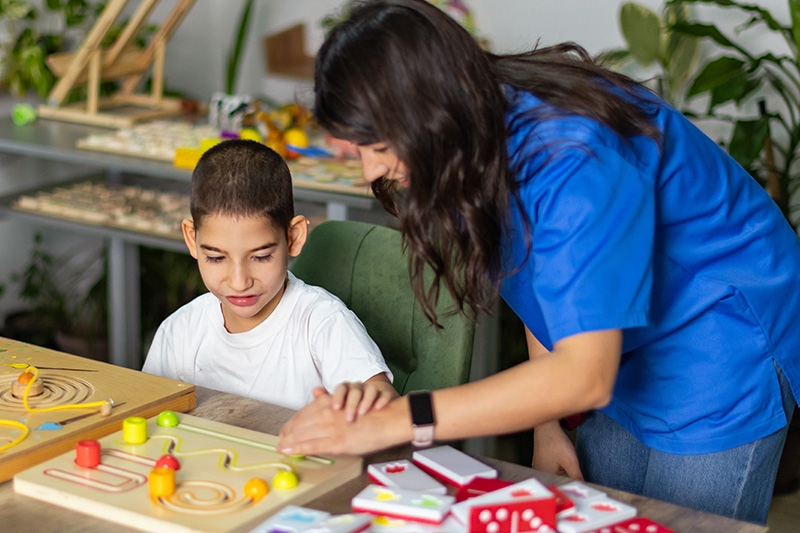
El ABA en el ámbito escolar se centra en un apoyo individualizado para el desarrollo de habilidades y el control del comportamiento, integrado en la jornada escolar del niño, en lugar de en una asistencia general en el aula.
Sí. Los terapeutas suelen colaborar con los profesores y el personal del centro educativo para garantizar la coherencia con las expectativas y estrategias del aula.
No. La terapia ABA se complementa con los servicios escolares y favorece la participación y el aprendizaje del niño en el marco de su plan educativo actual.
Las habilidades se basan en los objetivos individualizados de su hijo, las necesidades del aula y los comportamientos observados durante la jornada escolar. Colaboramos con los padres y el personal del colegio para establecer las expectativas de nuestro programa de atención.
¡Aceptamos nuevos clientes! Rellena nuestro formulario de admisión seguro y conforme a la HIPAA para informarnos sobre las necesidades de tu hijo. Nuestro equipo de admisión revisará tu información y se pondrá en contacto contigo para hablar sobre cómo la terapia puede contribuir al desarrollo de tu hijo.